
Admin Page Preview
Every SteadyScreen display serves this page on your own network. Point it at a URL, join Wi-Fi, update it, rotate the screen, pick a printer — from a phone or laptop, with nothing to install.
http://192.168.1.42
Demo — not a real device
SteadyScreen Admin
kiosk-saltwater · 192.168.1.42 · SteadyScreen · software 1.14.128 · os 1.4.3
Statuspage loaded
Uptime6 d 4 h
Memory used244 MB
Memory total512 MB
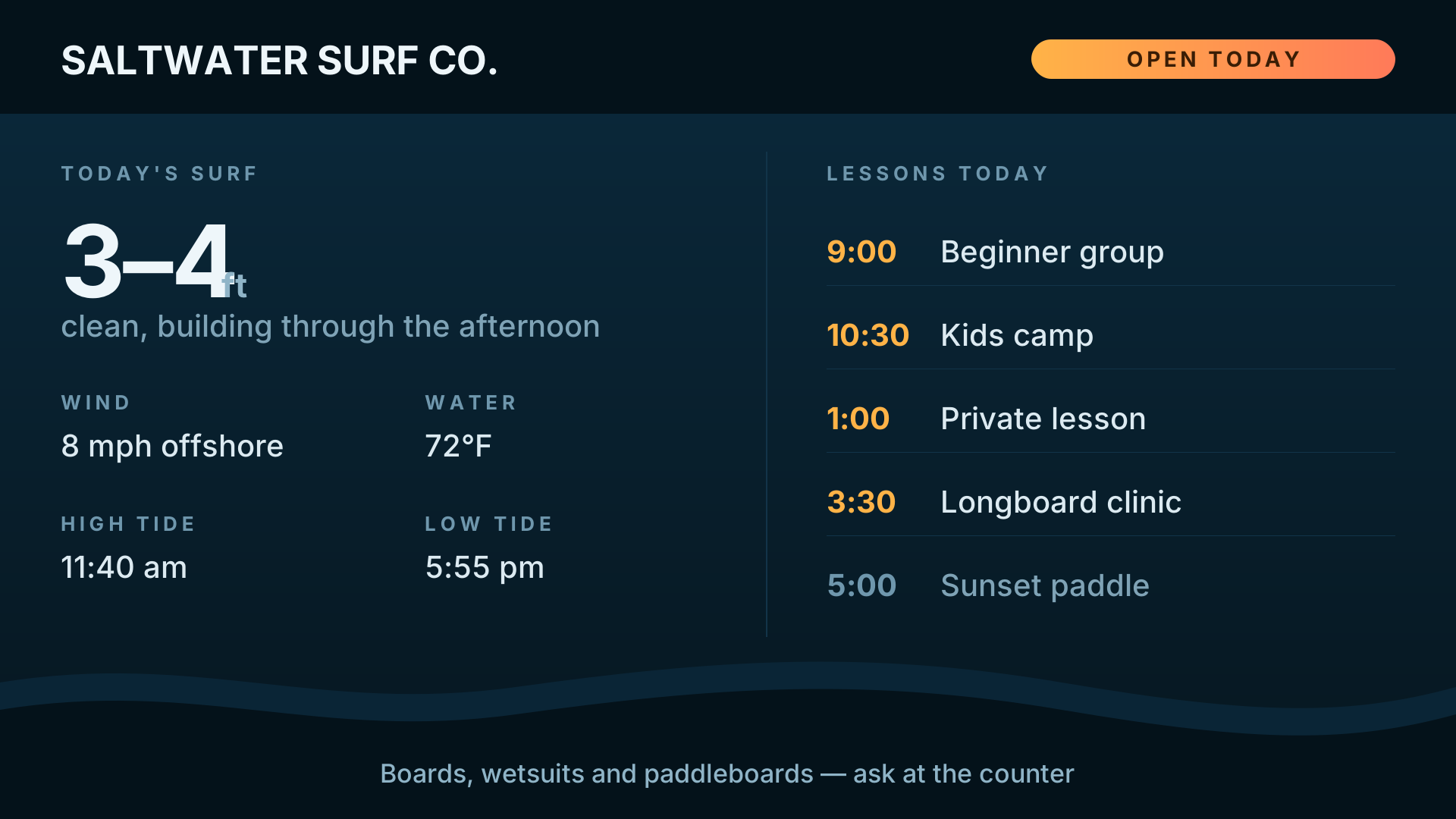
ShowingSaltwater Surf Co. — Today
Page
Screen — 01:42:03
Permissions
What the page being shown is allowed to ask this device for.
Network
- Wired
- up · 192.168.1.42/24
- Wi-Fi
- not connected
- Radio
- on
Saved networks
Saltwater-Staff
saved
In range
Hidden network
Network watchdog
Checks once a minute that this display can still reach its default gateway.
If it cannot, it renews the connection, then re-activates it, then restarts
NetworkManager, and only after all of that has failed does it reboot —
and it will not reboot a machine whose network has never worked since it
started, because that would only repeat the boot it has already had.
A site that is down is not a network fault and never triggers any of
this.
- Last check
- reached the gateway · 41 s ago
- Failed checks
- 0 in a row
- Last good
- 41 s ago
- Repairs attempted
- 0
Startup behaviour
- Phase
- page loaded
- Showing
- the configured page
- Cache at boot
- kept between starts
Offline
* While there is no network the device shows its own network page
instead of a “cannot reach the page” error, and loads the real page as soon as
the site answers. After the timeout above it stops waiting and loads the page from
cache instead — a menu board that reboots during an outage comes back showing
the last menu it saw, rather than a diagnostic screen nobody in the building can act on.
Set 0 to wait indefinitely. While the site is unreachable a 2px red edge marks the screen
as offline.
Display
- Output
- HDMI-1
- Now showing
- 1920x1080 @ 60.00 Hz
- Panel native
- 1920x1080
- HDMI-CEC
- available · TV
- Checked
- 01:41:58 (612 ms)
Screensaver
What the display shows when nobody is using it. A touch brings
the page straight back.
Both times count from the last touch, so turning the screen off sooner
than the screensaver means the screensaver never appears. A television shows “no
signal” while off — try one display first.
Crossing midnight is fine — 18:00 until 06:00 keeps it out of
trading hours.
Keyboard
The on-screen keyboard for touch displays. It appears when someone
touches a text field on the page being shown.
Key size scales the whole keyboard, keys and text together. It is capped
against the screen height, so on a short display the larger settings still fit —
they stay distinct from each other, but a bigger key on a small panel is necessarily less
big than on a tall one.
Nudge moves the keys away from a dead patch on the touchscreen. Only the
keys move — a press beside them still will not dismiss the keyboard.
Boot splash
Every client shows the SteadyScreen
boot splash. Setting your own is part of a paid licence, and is managed centrally so it is
the same on every screen in an account rather than something each machine is set up with
by hand.
Status
- State
- loaded
- Showing
- https://example.com/signage/today.html
- Title
- Saltwater Surf Co. — Today
- Browser up
- 6 d 4 h
- System up
- 6 d 4 h
- Load
- 0.08
- Memory
- 244 MB used · 268 MB available · 512 MB total
- Swap
- none
- Input
- touchscreen
Updates
- Software
- 1.14.128
- Operating system
- 1.4.3
Software
- Installed
- 1.14.128
- Published
- 1.14.128 (stable)
- Status
- up to date
- Automatic
- no, manual only
Updates are signed and are checked against that signature before anything
is installed. Installing restarts the browser; a failed update rolls itself back.
Operating system
An OS update can fail, and not every machine can be tested
first.
This replaces the whole operating system on this display's spare boot slot and
restarts it. It is designed to fall back on its own — if the new system does
not come up, the next boot returns to the one running now, and nothing is lost. But
hardware varies, and no release can be tested on every configuration that exists.
Only go ahead if you have a way to recover this machine physically — a
flash drive to reflash it, and access to the device itself.
Proceed at your own risk.
On a display, everything below appears only after that box is ticked and the button held for ten seconds. It is shown here so you can read it.
- Installed
- 1.4.3
- Published
- 1.4.3 (stable)
- Brings software
- 1.14.16 — older than the 1.14.44 running now
- Running
- slot a
- Would install to
- slot b
- Slot a
- os 1.4.3 · 1.14.44 — running, kept
- Slot b
- os 1.3 · b1.13.25
The OS is signed and checksummed the same way software is. It installs
to the slot this display is not running from, so the system running now is never
written to. The display reboots into the new slot and keeps it only after it has come
up and stayed up; otherwise the next boot returns here.
Update settings
When this is off nothing is installed unless someone presses
Install now above. Turn it off for a display in a shop, where an update arriving
on its own is a surprise to somebody else's business.
latest gets new builds before they are proven. Use it on a bench
machine, not on one a shop depends on. The channel applies to both the software and the
operating system.
Printing
- CUPS
- installed
- Queues
- Epson TM-T88V, TP200
- Default
- Epson TM-T88V
- Last print
- ok · 2026-08-31 19:04
If Epson TM-T88V is not ready, receipts go to TP200
instead.
Audio
- Playing through
- HDMI (card 1, device 3)
- Display detected
- yes
- Volume
- 60%
- Outputs found
- 3 · 1 with something attached
Sound follows the screen: the default is the HDMI output with a display on
it. HDMI provides no volume control of its own, so the level here is applied in
software on the way to the card — which also means it is the only volume control, as
the display's own remote will not change it. A page has to be playing audio for anything to
come out; use Test tone to check the wiring on its own.
Clock
- Local time
- Mon 2026-09-01 01:42:07 CDT
- Time zone
- America/Chicago
- NTP
- on · synchronised
Remote access (SSH)
- sshd
- running
- Log in as
- ssh kiosk@192.168.1.42
- Password login
- disabled (keys only)
- Host keys
- ed25519, rsa
This is the
kiosk account password,
used for ssh and for sudo. Turning password login on does not change it.
ed25519 SHA256:9pQ2v1nR8k0sT4uYcWx7ZlA3bF6hJmN5oP1qRsT2uVw
you@laptop
Remote support
Install a ScreenConnect access agent on
this display, so it can be reached from your ScreenConnect console the way your other
machines are.
- Agent
- installed
- Service
- screenconnect-abc123def456 running
Paste the link exactly as the console gives it,
including everything after the
? — that is what carries the name and
the custom fields, and an agent installed without them arrives unnamed.Rollback snapshots
What this display was, before each of
its last five updates — the software, the system files an update changes, and the
settings. Restoring one puts all of it back as it was at that moment and reboots.
Anything changed since is undone with it. They cost almost nothing: each holds every
component, but files that did not change between updates are shared rather than
copied.
back to 1.14.100 · undoes 1.14.101
· 2026-09-06 08:39 · 586 KB
Admin page password
Saved, but not used yet. Emailing a
temporary password needs a server to send it, which does not exist. Until then Forgot
password gives you the ssh way back in.
Power
On a display, what follows appears only after Shut down is pressed. It is shown here so you can read it.
This device cannot be switched back on remotely.
Shutting down cuts the admin page, ssh and everything else. Unless somebody is standing
next to the machine and can reach its power button, it stays off until someone travels
to it. If you only need it back in a working state, use Reboot instead.